Natalia Mikhailovna Dudinskaya
People’s Artist of the USSR
My Ballet Repertoire Teacher
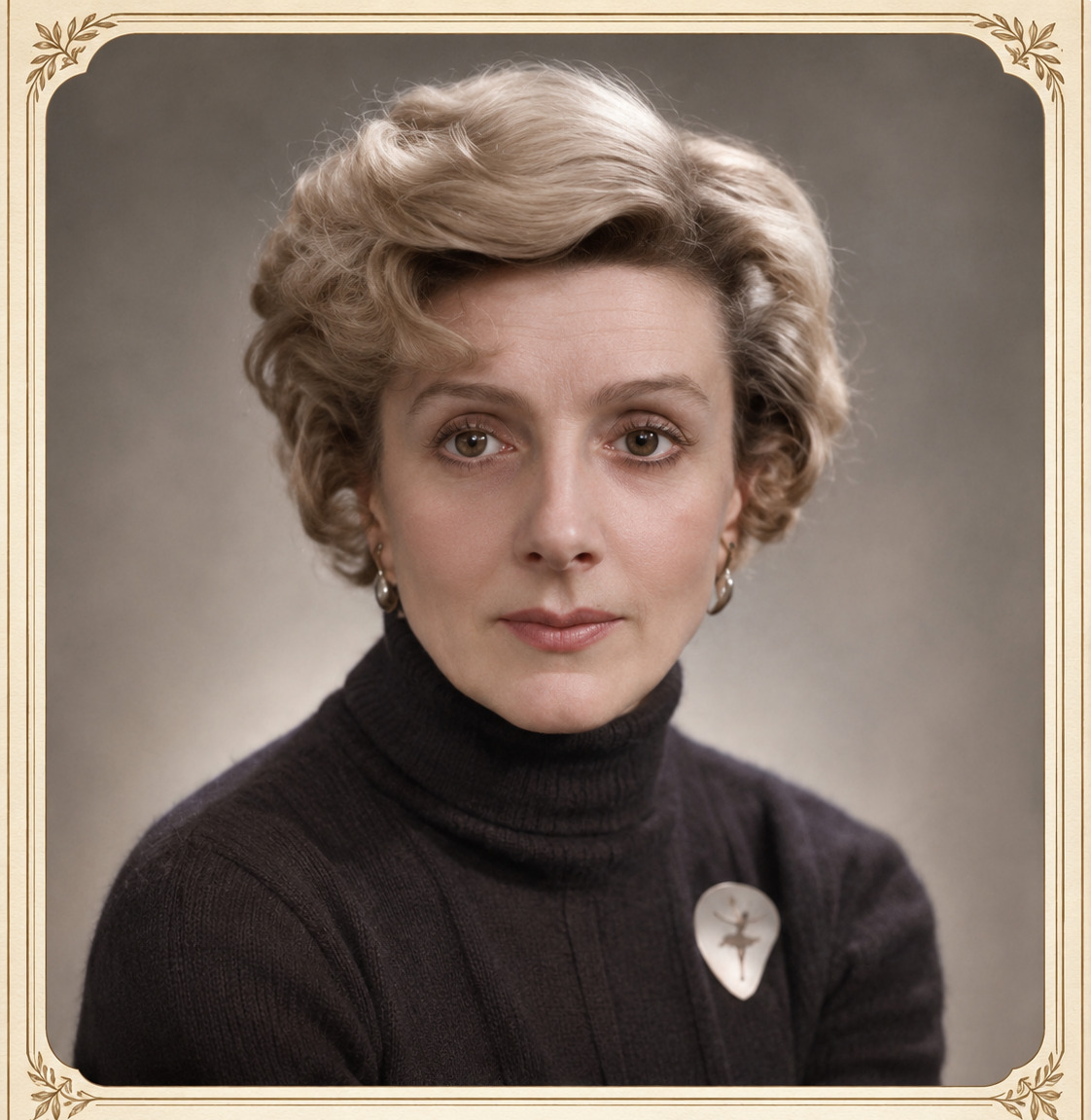
Natalia Mikhailovna Dudinskaya (1912–2003) was one of the outstanding ballerinas of twentieth-century Russian ballet, a leading artist of the Kirov Opera and Ballet Theatre, and an influential teacher of the Leningrad classical ballet tradition.
A distinguished pupil of Agrippina Yakovlevna Vaganova, Dudinskaya became an important representative of the pedagogical principles established by her teacher.
Her artistic career combined extraordinary technical virtuosity, musical precision, dramatic expressiveness, and an exceptional command of the classical ballet repertoire.
She received the title of People’s Artist of the USSR in 1957 and was named an Honorary Citizen of Saint Petersburg in 1998.
Biography
Natalia Mikhailovna Dudinskaya was born on August 21, 1912, in Kharkov, then part of the Russian Empire. Her first ballet lessons were given by her mother, Natalia Tagliori, who was herself a dancer and teacher.
In 1923, Dudinskaya entered the Petrograd Choreographic School, later known as the Leningrad Choreographic School. Her professional formation was closely connected with Agrippina Yakovlevna Vaganova, under whose guidance she developed the technical foundations and artistic discipline that would distinguish her career.
She graduated in 1931 and immediately joined the ballet company of the Leningrad State Academic Theatre of Opera and Ballet, subsequently known as the Kirov Theatre.
Dudinskaya rapidly established herself as a leading ballerina. Her repertoire encompassed the great classical ballets of the nineteenth century as well as new productions created during the Soviet period.
Artistic Career and Repertoire
Dudinskaya was celebrated for her performances in the principal roles of the classical ballet repertoire, including Odette-Odile in Swan Lake, Aurora in The Sleeping Beauty, Giselle, and Raymonda.
She also became an important interpreter of Soviet choreographic works. Her performances included leading roles in The Flames of Paris, Lost Illusions, Laurencia, Gayane, and The Path of Thunder.
One of her most significant artistic achievements was the title role in Sergei Prokofiev’s Cinderella, choreographed by Konstantin Mikhailovich Sergeyev and premiered in 1946.
Her artistic partnership with Sergeyev became an important part of the history of the Kirov Ballet. Their collaboration extended beyond stage performance into choreography, the interpretation of classical ballet heritage, and the education of young dancers.
Dudinskaya’s dancing was characterized by technical brilliance, strength, precision, and the ability to combine virtuoso execution with a powerful dramatic presence.
Pedagogical Legacy
Dudinskaya began her pedagogical work in 1951, teaching professional improvement classes for dancers of the Kirov Ballet. She subsequently worked as a ballet coach, contributing to the preparation and artistic development of leading performers.
From 1964, she taught at the Leningrad Choreographic School named after Agrippina Vaganova, where she continued her pedagogical career for several decades. She became a professor in 1995.
Her teaching represented a direct continuation of the Vaganova tradition. Particular attention was devoted to technical accuracy, musicality, coordination, physical endurance, and the expressive possibilities of classical movement.
Dudinskaya trained numerous generations of ballet dancers. Among the artists associated with her teaching were Margarita Kullik, Ulyana Lopatkina, and Anastasia Volochkova.
Together with Konstantin Sergeyev, she also participated in the preservation, reconstruction, and staging of classical ballet productions. Their collaborative work helped transmit important elements of the Saint Petersburg theatrical tradition to subsequent generations.
My Teacher
During my studies at the Leningrad Choreographic School named after Agrippina Vaganova, Natalia Mikhailovna Dudinskaya was one of my teachers of classical ballet repertoire.
Her place in my professional education is especially significant because she represented a direct pedagogical connection with Agrippina Vaganova herself.
Through her teaching, the study of classical ballet repertoire was connected with the living artistic traditions of the Kirov Theatre and the Leningrad Choreographic School.
My Pedagogical Lineage
Natalia Mikhailovna Dudinskaya occupies a distinctive place in my direct pedagogical lineage. She was a pupil of Agrippina Yakovlevna Vaganova, whose teaching established one of the most influential methodological traditions in twentieth-century classical ballet education. Dudinskaya subsequently became one of my own teachers of classical ballet repertoire at the Leningrad Choreographic School.
Founder of the Vaganova System
Teacher of Natalia Dudinskaya
Pupil of Agrippina Vaganova
My Teacher of Classical Ballet Repertoire
Student of Natalia Dudinskaya
Ballet Teacher and Researcher
A documented line of direct teacher–student relationships within the Saint Petersburg ballet tradition. The disciplines taught at each stage are not necessarily identical.
The significance of this lineage lies in the continuity between the methodological foundations established by Vaganova and the artistic interpretation of classical ballet repertoire transmitted by Dudinskaya. Their relationship illustrates how a pedagogical tradition may be preserved not only through formal technical instruction but also through the interpretation and performance of choreographic works.
As a pupil of Vaganova, Dudinskaya received her professional training within a system that emphasized the coordinated development of the entire body, the progressive organization of technical material, musical responsiveness, and the expressive purpose of classical movement. These principles became part of the broader pedagogical tradition that Dudinskaya represented throughout her subsequent artistic and teaching career.
Dudinskaya’s own professional experience introduced an additional dimension to this continuity. Her long career at the Kirov Theatre connected the technical foundations of classical training with the practical demands of theatrical performance. As a teacher of repertoire, she transmitted knowledge concerning choreographic style, musical phrasing, dramatic characterization, and the interpretation of classical roles.
My studies with Dudinskaya therefore represent a direct connection with a generation of performers and teachers who had personally studied with Vaganova and subsequently contributed to the preservation of the Saint Petersburg ballet tradition. This connection forms one component of my wider pedagogical genealogy, which also includes the distinct traditions transmitted by my teachers of classical dance, pas de deux, character dance, historical dance, and ballet methodology.
Historical and Methodological Note. The diagram identifies direct teacher–student relationships. It should not be interpreted as an assertion that all three generations taught the same discipline or transmitted an identical body of pedagogical material. Vaganova’s role in this lineage concerns the formation of Dudinskaya as a classical ballet dancer, while Dudinskaya’s direct teaching relationship with Aleksei Fomkin concerned classical ballet repertoire.
Historical Photo Gallery
Archival photographs illustrating Natalia Dudinskaya’s stage career and her later pedagogical life.
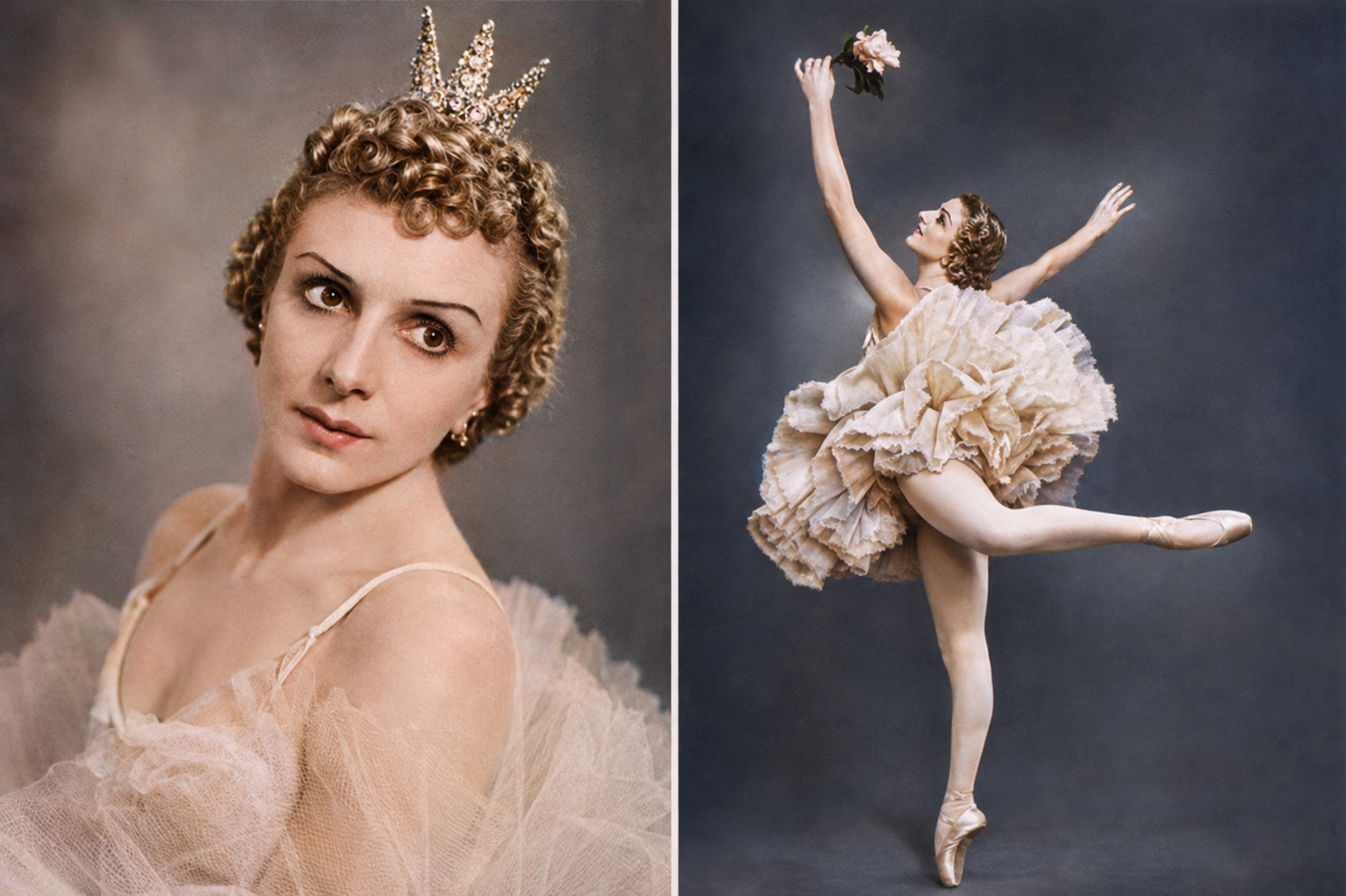
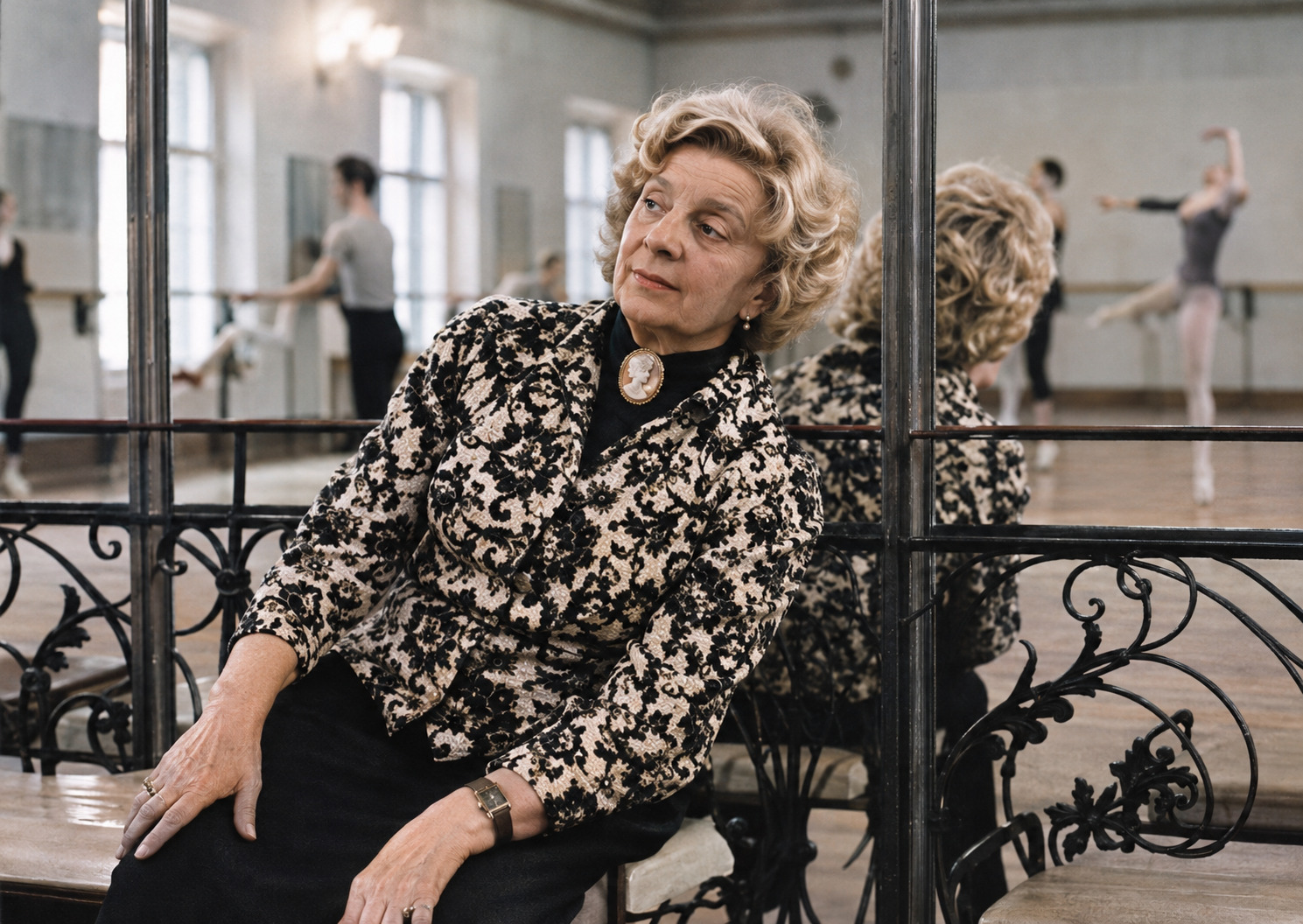
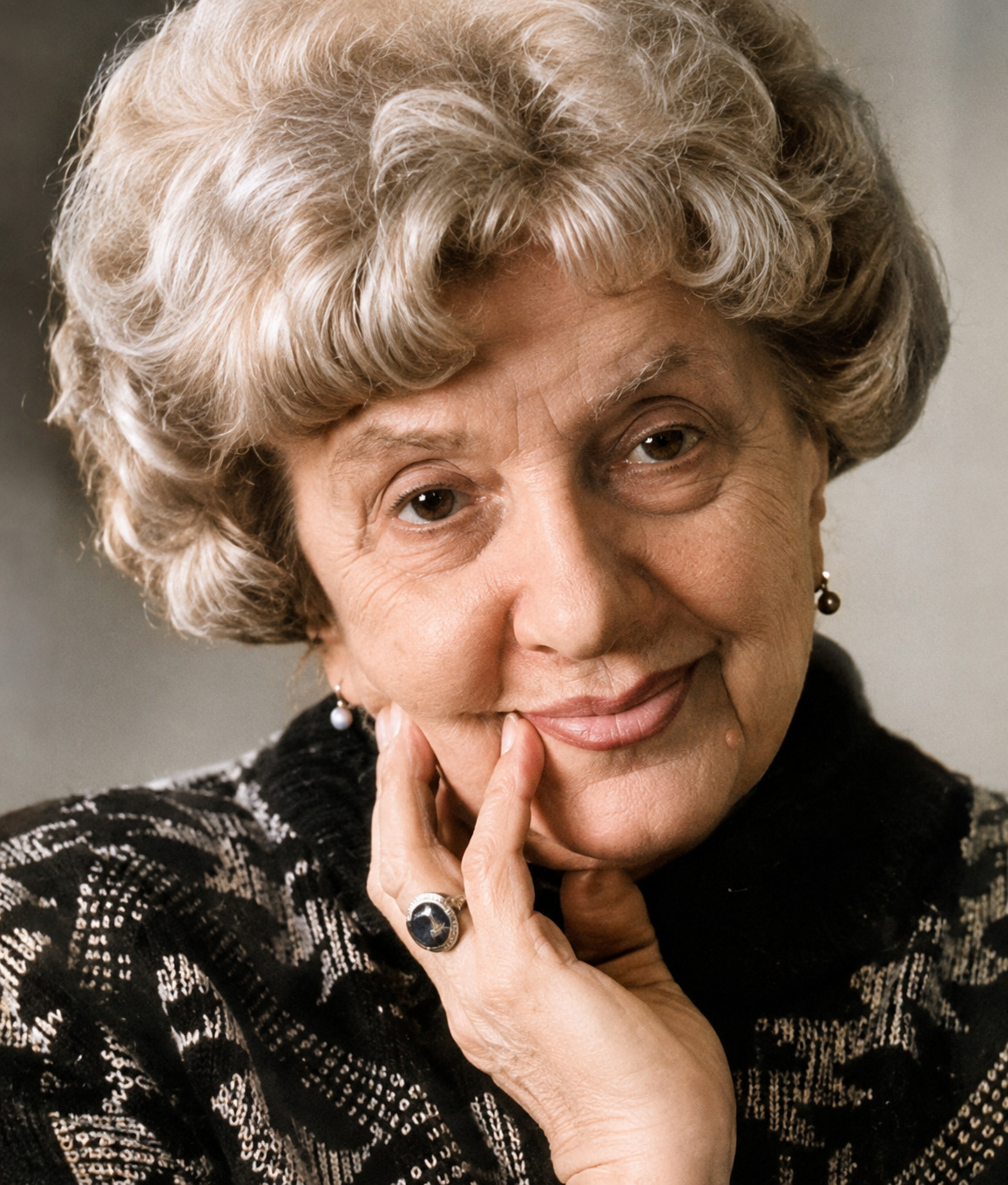
Historical photographs digitally restored and colorized. Color versions are modern interpretations of the original archival images.