Konstantin Mikhailovich Sergeyev
People’s Artist of the USSR
My Acting Teacher
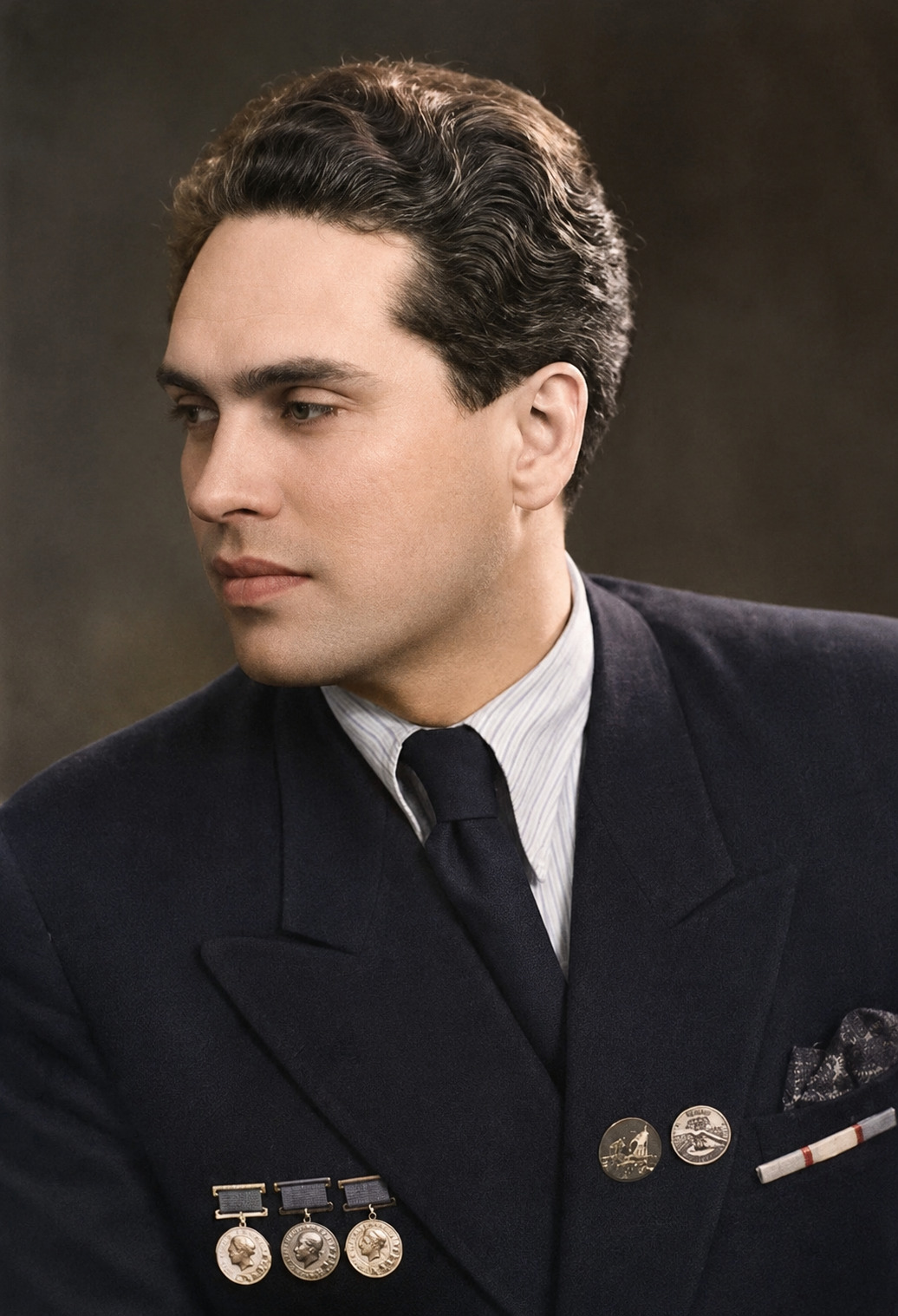
Konstantin Mikhailovich Sergeyev (1910–1992) was one of the most distinguished representatives of twentieth-century Russian classical ballet. A leading dancer of the Kirov Opera and Ballet Theatre, an influential choreographer, and a professor of ballet education, he played a major role in the artistic and institutional history of the Leningrad ballet school.
His career united three closely connected fields: the performance of the classical repertoire, the creation and preservation of ballet productions, and the education of future generations of dancers.
Sergeyev received the title of People’s Artist of the USSR in 1957 and was awarded the title of Hero of Socialist Labour in 1991.
Biography
Konstantin Mikhailovich Sergeyev was born in Saint Petersburg in 1910. He received his professional ballet education at the Leningrad Choreographic School, where his teachers included Maria Kozhukhova, Viktor Semyonov, and Vladimir Ponomarev.
In 1930, Sergeyev joined the ballet company of the Leningrad State Academic Theatre of Opera and Ballet, later widely known as the Kirov Theatre and today as the Mariinsky Theatre. He remained one of its principal dancers until 1961.
His performing style was distinguished by the refinement of the classical school, a noble stage presence, musical sensitivity, and a particular ability to reveal the psychological dimensions of a dramatic role. These qualities made him especially successful in the lyrical and romantic repertoire.
Artistic and Choreographic Career
During the 1930s and 1940s, Sergeyev frequently partnered Galina Ulanova. Their performances became an important chapter in the history of Soviet ballet. In 1940, they created the principal roles in the Leningrad premiere of Sergei Prokofiev’s Romeo and Juliet, choreographed by Leonid Lavrovsky.
His repertoire also included Prince Siegfried in Swan Lake, Prince Désiré in The Sleeping Beauty, Albrecht in Giselle, and Jean de Brienne in Raymonda. Following the Second World War, his artistic partnership with Natalia Dudinskaya became another significant part of his career.
From 1946, Sergeyev increasingly devoted himself to choreography. His production of Prokofiev’s Cinderella at the Kirov Theatre marked an important stage in his development as a choreographer.
He subsequently staged and revised numerous classical and contemporary ballets. Among the works associated with his choreographic activity were The Sleeping Beauty, Raymonda, Cinderella, and other productions that formed part of the Soviet ballet repertoire.
Sergeyev served as chief choreographer of the Kirov Theatre in 1951–1955 and again in 1960–1970. His work as a choreographer combined respect for the nineteenth-century classical tradition with the theatrical and aesthetic requirements of his own time.
Pedagogical Legacy
Sergeyev’s educational career was closely connected with the Leningrad Choreographic School named after Agrippina Vaganova. He began teaching classical dance in the early 1930s and later assumed major responsibilities in the artistic direction of the institution.
From 1973, he directed the Leningrad Choreographic School, contributing to the preservation of its traditions and the professional preparation of young ballet artists. Following the institution’s transformation into the Vaganova Academy of Russian Ballet, he became its president in 1991.
His teaching included the interpretation of classical ballet heritage and the development of acting skills. Sergeyev approached ballet performance as an artistic discipline in which movement, music, dramatic intention, and character interpretation were inseparable.
My Teacher
During my studies at the Leningrad Choreographic School named after Agrippina Vaganova, Konstantin Mikhailovich Sergeyev was my acting teacher.
The course included acting exercises, the interpretation of dramatic situations, and the study of scenes from classical ballet productions. The practical classes were frequently conducted by Valery Evgenievich Sergeev, who worked alongside Konstantin Mikhailovich.
This training formed part of my professional education in the theatrical dimension of classical ballet: the relationship between movement, character, dramatic expression, and the artistic meaning of performance.
My Pedagogical Lineage
Konstantin Mikhailovich Sergeyev occupies a distinct place in my pedagogical lineage. Unlike the teachers who instructed me directly in classical dance technique, Sergeyev contributed to my professional education through the study of acting and dramatic interpretation in ballet.
His own professional training at the Leningrad Choreographic School was associated with three teachers named in his biography: Maria Kozhukhova, Viktor Semyonov, and Vladimir Ponomarev.
These connections represent the educational background from which Sergeyev developed his artistic and pedagogical approach. His subsequent experience as a principal dancer, choreographer, and director of the Leningrad ballet school formed the basis of his contribution to the education of later generations.
Reconstruction of Konstantin Sergeyev’s documented educational background and his direct pedagogical connection with Aleksei Fomkin. The dashed line identifies the additional participation of Valery Evgenievich Sergeev in practical acting instruction.
Sergeyev’s Professional Teachers
Maria Kozhukhova, Viktor Semyonov, and Vladimir Ponomarev are identified in Sergeyev’s biography as teachers involved in his professional ballet education.
The three connections are presented as parallel branches because the available biographical information does not establish a chronological sequence between their respective periods of instruction.
Their influence belongs to Sergeyev’s broader artistic formation, preceding his professional career at the Kirov Theatre and his subsequent work as a choreographer and teacher.
The Transmission of Theatrical Interpretation
Sergeyev’s contribution to my professional education concerned the artistic interpretation of ballet rather than the systematic instruction of classical dance technique.
His teaching addressed dramatic action, the development of character, and the relationship between movement and theatrical meaning. These elements constitute an essential dimension of professional ballet education alongside technical training.
The participation of Valery Evgenievich Sergeev in practical acting classes is represented separately in the diagram. This distinction preserves the different roles described in my recollection of the course.
Place in My Pedagogical Genealogy
Konstantin Mikhailovich Sergeyev represents the theatrical and interpretive dimension of my professional ballet education.
His pedagogical contribution complemented the instruction I received from my classical dance teachers, connecting technical preparation with the dramatic and artistic demands of performance.
His place in my pedagogical genealogy therefore reflects the interdisciplinary structure of professional ballet training, in which classical technique, acting, musicality, and artistic interpretation develop as related but distinct fields.
Historical and Methodological Note. The diagram identifies Sergeyev’s three teachers as named in the present biography. It does not assign them undocumented teaching specializations or extend their own pedagogical genealogies without additional sources. The direct connection from Konstantin Sergeyev to Aleksei Fomkin represents acting instruction, not classical dance training. The dashed connection represents Valery Sergeev’s participation in practical acting classes.
Historical Photo Gallery
Archival images illustrating Sergeyev’s stage career and his artistic partnership with Natalia Dudinskaya.
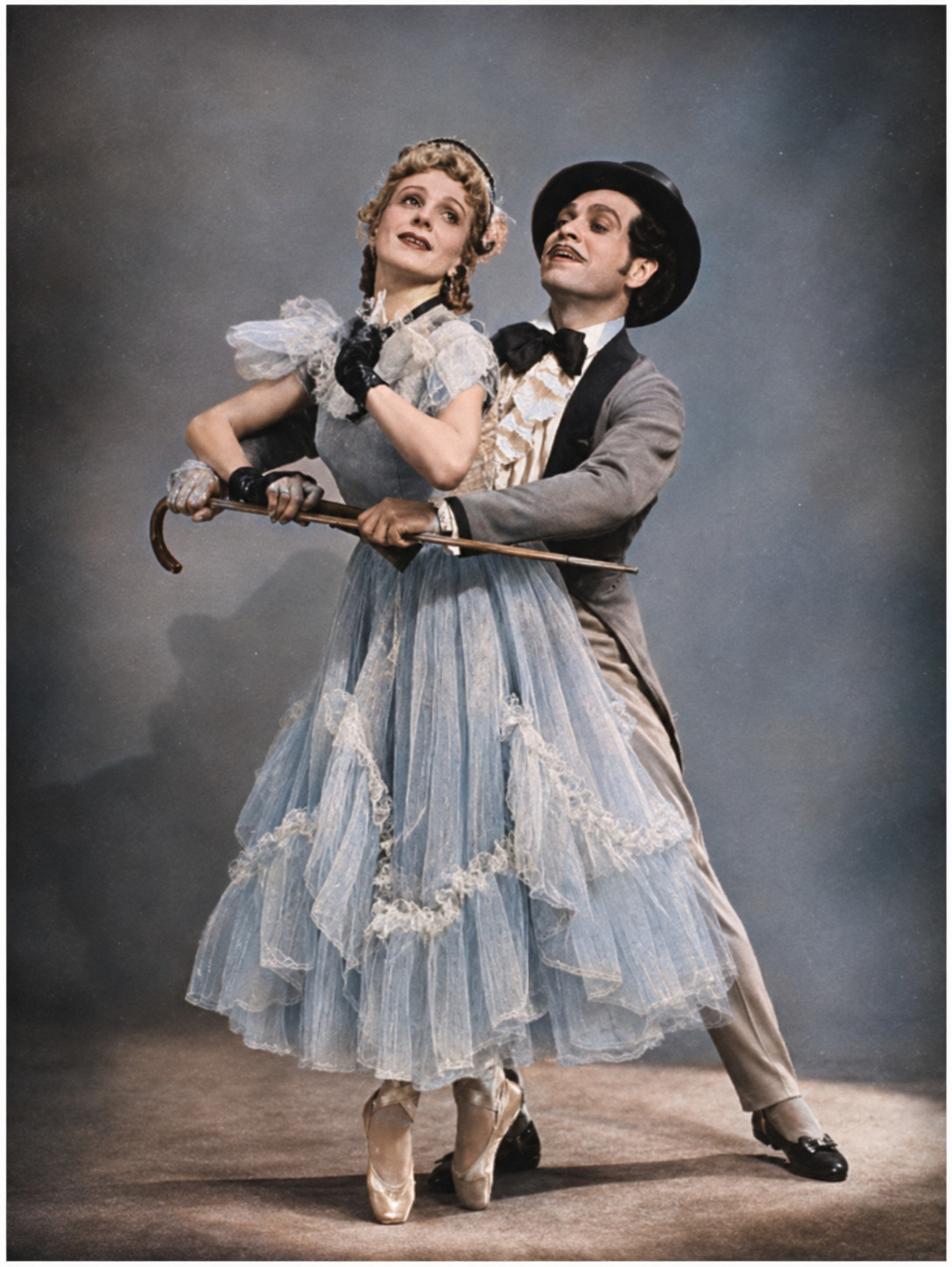
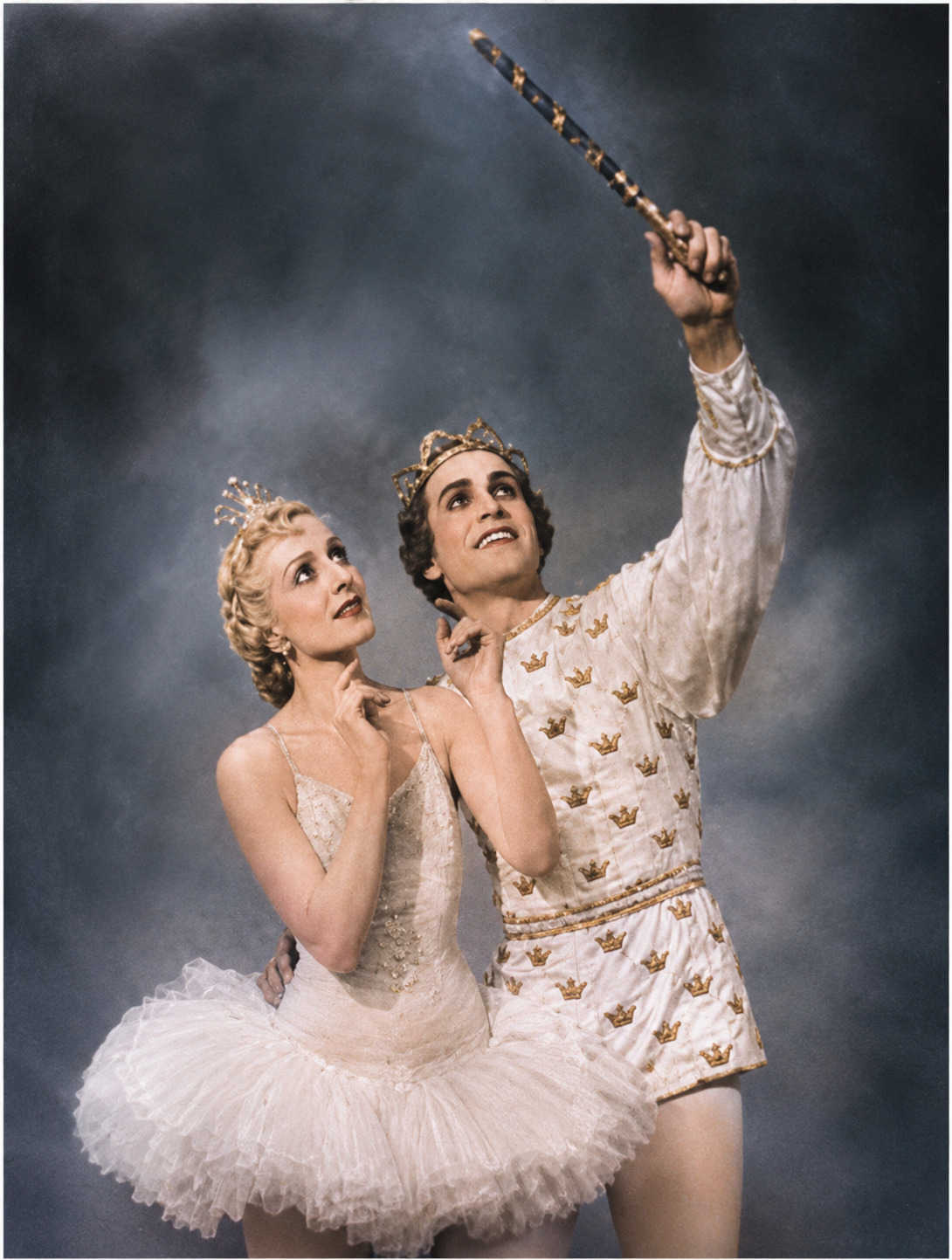
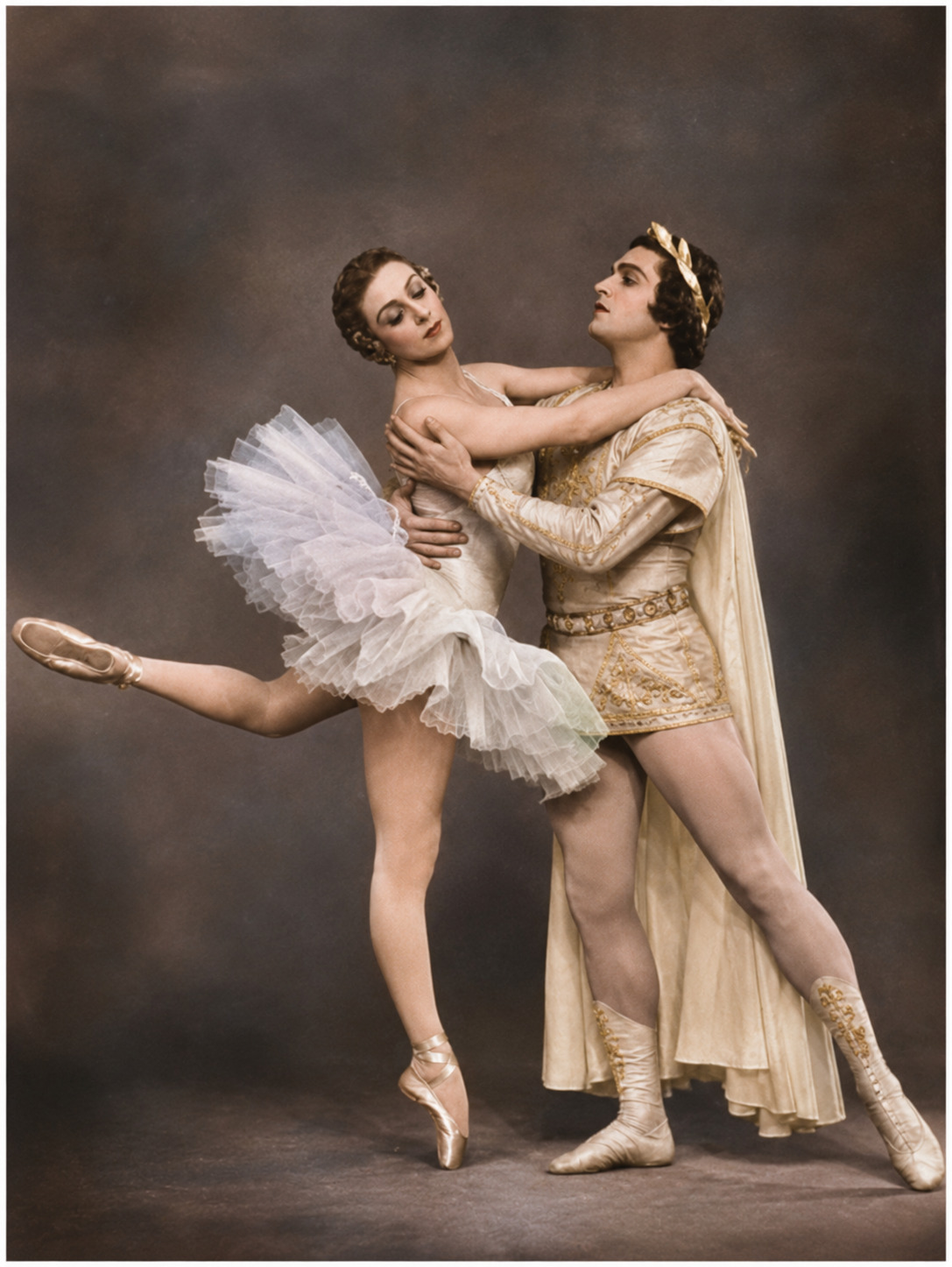
Historical photographs digitally restored and colorized. The color versions are modern interpretations of the original archival photographs.