Vitaly Ivanovich Afanaskov
Kirov (Mariinsky) Ballet
Leningrad Choreographic School
My Classical Dance Teacher — Years Three and Four
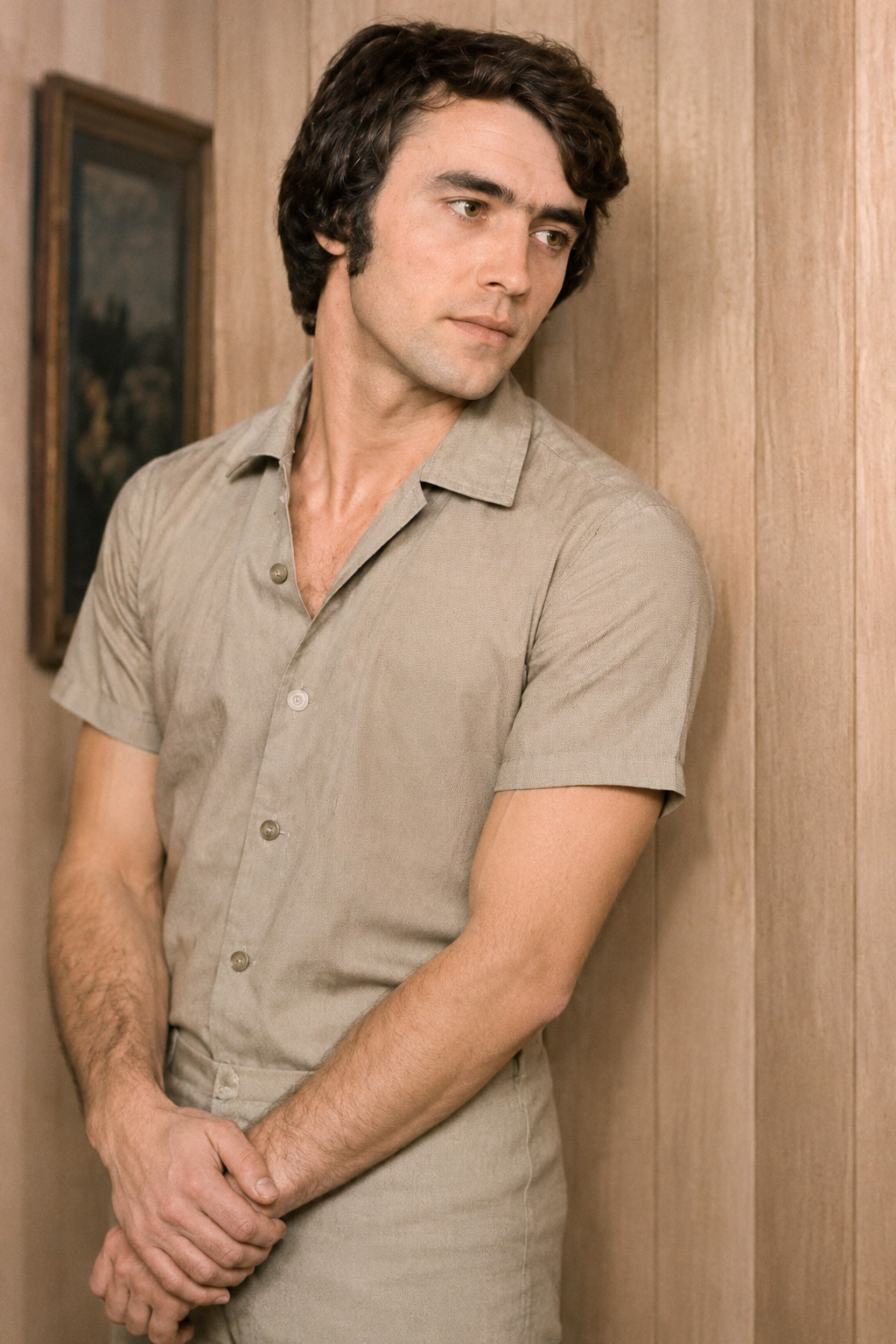
Vitaly Ivanovich Afanaskov, born on July 11, 1941, in Leningrad, was a ballet dancer of the Kirov Theatre and a teacher of classical dance.
A graduate of the Leningrad Choreographic School, he received his professional education under Abdrakhman Kumysnikov and Boris Vasilyevich Shavrov.
From 1961 to 1983, he performed with the Kirov Opera and Ballet Theatre, now the Mariinsky Theatre.
His repertoire included leading roles in classical ballet, and his artistic career was distinguished by participation in major theatrical productions, concerts, and ballet films.
In 1966, he became a laureate of the International Ballet Competition in Varna.
Vitaly Ivanovich Afanaskov was my teacher of classical dance during my third and fourth years of professional ballet education at the Leningrad Choreographic School named after Agrippina Vaganova.
Biography
Vitaly Ivanovich Afanaskov was born in Leningrad on July 11, 1941, shortly after the beginning of the Second World War on Soviet territory.
He received his professional ballet education at the Leningrad Choreographic School, one of the principal institutions responsible for preserving and developing the Russian tradition of classical dance.
During his studies, Afanaskov received his classical dance training under Abdrakhman Kumysnikov and Boris Vasilyevich Shavrov.
Both teachers belonged to the historical pedagogical tradition of the Leningrad ballet school, whose development was closely connected with the Imperial Russian ballet heritage.
Following graduation, Afanaskov joined the Kirov Theatre ballet company in 1961.
His professional career developed during a period of significant artistic achievements in both classical ballet and twentieth-century Soviet choreography.
In 1966, Afanaskov became a laureate of the International Ballet Competition in Varna, Bulgaria.
He continued performing with the Kirov Ballet until 1983.
Artistic Career
During more than two decades with the Kirov Ballet, Afanaskov performed a wide range of classical roles.
Among his documented roles were Prince Siegfried in Swan Lake, Albrecht in Giselle, Prince Désiré in The Sleeping Beauty, the Prince in The Nutcracker, and Ivan Tsarevich in The Firebird.
His artistic activities extended beyond the Kirov Theatre stage. He appeared in ballet concerts at the Great Hall of the Leningrad Philharmonic, performing classical excerpts and works by contemporary choreographers.
These programmes included choreography by George Balanchine, Leonid Jacobson, and Georgy Aleksidze.
Beginning in 1966, Afanaskov participated in artistic evenings dedicated to Natalia Dudinskaya, as well as programmes of chamber music and chamber ballet.
He also appeared in performances associated with Lyubov Kunakova and Gabriela Komleva.
His final documented appearance at the Great Hall of the Leningrad Philharmonic took place on June 20, 1983, with Gabriela Komleva.
Film and Television
Afanaskov’s performing career is also documented in Soviet ballet films and television recordings.
He appeared in the 1980 film-ballet Raymonda, based on the ballet by Alexander Glazunov, with choreography after Marius Petipa in the Kirov Theatre production revised by Konstantin Sergeyev.
The film featured Irina Kolpakova in the title role. Afanaskov was credited among the troubadours.
The production was directed for television by Yuri Bogatyrenko.

His television appearances also included a scene from Esmeralda, performed with Gabriela Komleva in a 1981 recording of historical choreography.
Pedagogical Career
Afanaskov’s work as a teacher of classical dance forms an important part of his professional legacy.
His experience as a performer of major classical roles provided a substantial artistic background for his pedagogical activity.
In the professional ballet school, the third and fourth years of training represent a period of increasingly complex technical development.
The foundations established during the initial years are progressively extended through more demanding combinations, coordination, turns, jumps, and the development of expressive movement.
The teacher’s role during this period is particularly significant in consolidating correct technical habits while preparing students for the advanced stages of professional training.
Afanaskov’s teaching connected the practical experience of the Kirov Theatre with the systematic traditions of classical ballet education.
My Teacher
Vitaly Ivanovich Afanaskov taught me classical dance during my third and fourth years at the Leningrad Choreographic School named after Agrippina Vaganova.
His teaching followed the initial two years of my classical dance education under Lyudmila Leonidovna Melnikova (Koroteeva).
This period represented the next stage of my professional development, when the fundamental principles of classical dance were further consolidated and the technical vocabulary became more complex.
Through his instruction, I received direct pedagogical experience from an artist whose performing career was closely associated with the classical repertoire and artistic traditions of the Kirov Ballet.
My Pedagogical Lineage
Vitaly Ivanovich Afanaskov occupies a direct place in my pedagogical lineage as my classical dance teacher during the third and fourth years of professional education.
His own classical dance education was shaped by two teachers: Abdrakhman Kumysnikov and Boris Vasilyevich Shavrov. Their pedagogical backgrounds connect Afanaskov with distinct branches of the Leningrad classical ballet tradition.
The first branch passes through Pyotr Andreyevich Gusev and Abdrakhman Kumysnikov. The second passes through Boris Shavrov and Leonid Leontiev, whose predecessors include Platon Karsavin and Nikolai Legat. The earlier historical foundations of these lines extend to prominent representatives of the Imperial Russian ballet.
Reconstruction of two pedagogical branches converging in the professional education of Vitaly Ivanovich Afanaskov. The final direct connection represents his teaching of Aleksei Fomkin during the third and fourth years of classical dance training.
The Kumysnikov Lineage
The first branch of Afanaskov’s pedagogical genealogy connects him with Abdrakhman Kumysnikov and, through the historical teaching tradition, with Pyotr Andreyevich Gusev.
This connection forms one of the two lines through which Afanaskov received his professional classical dance education at the Leningrad Choreographic School.
The Shavrov Lineage
The second branch connects Afanaskov with Boris Vasilyevich Shavrov, whose pedagogical predecessors included Leonid Leontiev.
The reconstructed genealogy identifies two earlier branches leading to Leontiev: one through Platon Karsavin and another through Nikolai Legat.
These lines are associated with earlier representatives of the Saint Petersburg classical ballet tradition, including Marius Petipa, Gustav Legat, Pavel Gerdt, Christian Johansson, and N. I. Volkov.
Historical Significance of These Connections
These pedagogical lines demonstrate the continuity of professional classical ballet education across several generations.
They connect the nineteenth-century Imperial Russian ballet tradition with the development of the Leningrad school during the Soviet period.
Afanaskov’s place in this genealogy is especially important because he represents the direct transmission of these traditions to my own professional education.
Historical and Methodological Note. The genealogy reproduces the relationships represented in the existing research diagram. The earlier historical branches constitute a working reconstruction and remain subject to documentary and archival verification. The diagram distinguishes these historical connections from Afanaskov’s direct teaching relationship with Aleksei Fomkin.
The complete interactive genealogy of my classical dance education is presented on the Fomkin Ballet Academy website.
Explore My Complete Pedagogical Genealogy →
Historical Photo Gallery
Archival photographs documenting the artistic career of Vitaly Ivanovich Afanaskov.
Historical Sources
Saint Petersburg Philharmonia. Vitaly Afanaskov — biographical entry, performing career, repertoire, and Philharmonic appearances. Read the biography
Degen, A., and Stupnikov, I. Leningrad Ballet, 1917–1987: A Reference Book. 1988. Biographical entry on Vitaly Afanaskov. Consult the reference book
Soviet Television. Raymonda, film-ballet, 1980. Director: Yuri Bogatyrenko. Featuring Irina Kolpakova and artists of the Kirov Ballet.
Fomkin Ballet Academy. Aleksei Fomkin’s Teaching Method: Pedagogical Genealogy. Historical diagram of classical ballet teacher-student relationships. View the genealogy