Natalia Lazarevna Dunaeva
Associate Professor
St. Petersburg Rimsky-Korsakov Conservatory
Vaganova Ballet Academy
Founder of the Ballet Source Studies Readings
My Teacher of Ballet Source Studies
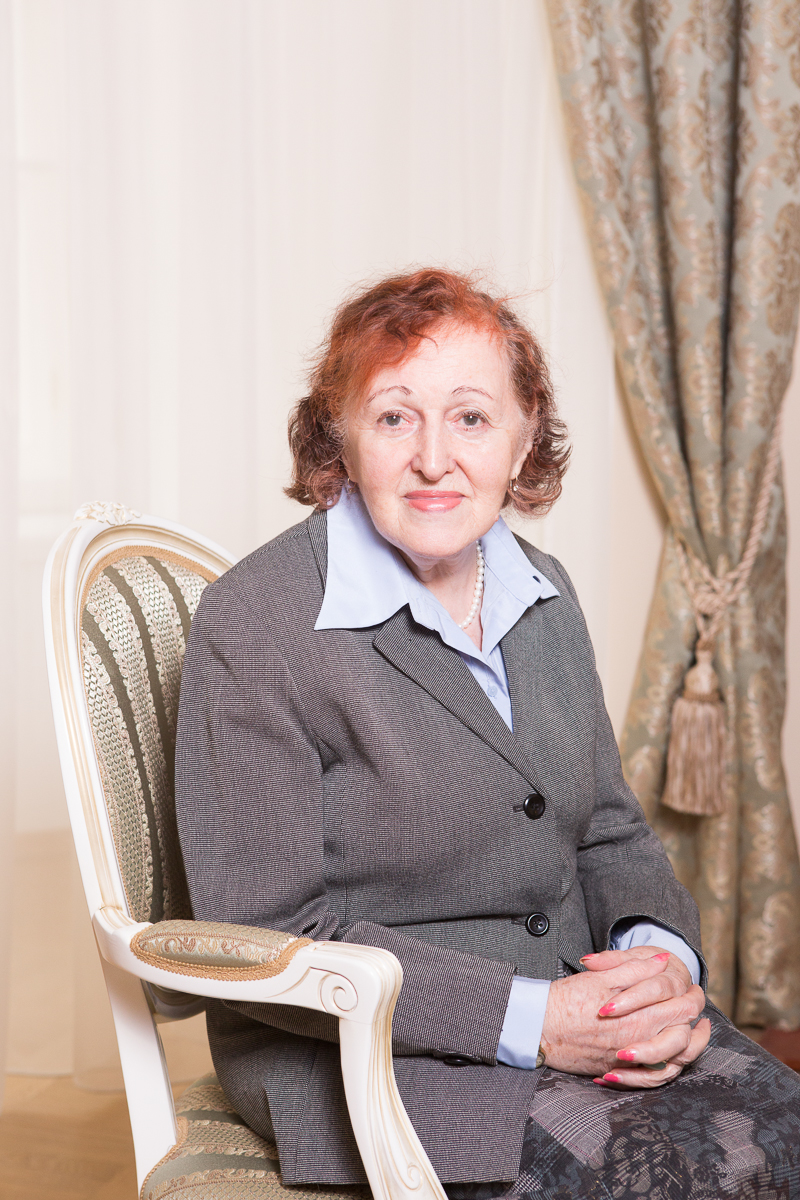
Natalia Lazarevna Dunaeva (1933–2020) was a distinguished Russian ballet historian, researcher, and educator whose scholarly work made an important contribution to the study of Russian choreographic history.
Her principal academic contribution was the development of ballet source studies as a specialized discipline within the professional education of ballet historians and scholars.
She taught at the St. Petersburg Rimsky-Korsakov State Conservatory and the Vaganova Ballet Academy, introducing generations of students to archival research, documentary evidence, and the critical interpretation of historical sources.
Natalia Lazarevna Dunaeva was my teacher of source studies at the Vaganova Ballet Academy.
Biography
Natalia Lazarevna Dunaeva was born in 1933. Her early academic interests were connected with literature and literary history.
She pursued postgraduate studies in Leningrad, completing her postgraduate education in 1961.
Her professional activities initially combined literary education, teaching, and work on documentary and educational films.
She taught literature at the Leningrad Choreographic School named after Agrippina Vaganova.
During this period, her contact with the ballet world gradually transformed her scholarly interests. The history of ballet became the central subject of her subsequent research.
Her work developed at the intersection of ballet history, literary history, archival scholarship, and historical documentation.
Over the course of her career, she published numerous studies concerning Russian ballet and its cultural environment.
Historical Research
Dunaeva’s principal scholarly interests concerned the history of Russian ballet in the late nineteenth and early twentieth centuries.
She devoted particular attention to the cultural world of the Silver Age, including the international activity of Russian dancers, choreographers, and theatrical entrepreneurs.
Her research addressed the lives and work of Sergei Diaghilev, Michel Fokine, Tamara Karsavina, Anna Pavlova, and other significant figures in Russian ballet history.
She was also interested in lesser-known individuals whose contributions could be reconstructed through archival documents, correspondence, and contemporary publications.
Her approach extended beyond the study of individual artistic biographies. She investigated the cultural, social, and historical contexts in which ballet developed.
An important dimension of her scholarship was the study of family histories and biographical connections, which could reveal previously overlooked relationships within theatrical culture.
Selected Publications
This collection brings together historical studies based on Dunaeva’s extensive archival research.
The essays examine the activities of Russian ballet artists and their international cultural connections, moving between St. Petersburg, Paris, London, Berlin, and South America.
The book includes studies of both celebrated and lesser-known figures in the history of ballet.
Documentary and Film Work
Alongside her academic publications, Dunaeva worked on scripts for documentary and educational films.
Among the works associated with her career was the documentary Nikita Dolgushin: The Philosophy of Dance (1992).
Her film work reflected the same interest in cultural history and artistic biography that characterized her scholarly publications.
Academic and Pedagogical Career
In 1988, at the invitation of choreographer Nikita Dolgushin, Natalia Dunaeva began teaching at the Leningrad State Conservatory, later the St. Petersburg Rimsky-Korsakov State Conservatory.
She worked within the Department of Ballet Directing, where she developed a specialized course in ballet source studies.
In 1995, she also began teaching this discipline at the Vaganova Ballet Academy.
Her pedagogical activity introduced students to the systematic examination of historical evidence and to the methodological foundations of archival research.
Dunaeva’s teaching contributed to the formation of a generation of ballet scholars who regarded historical documentation as an essential foundation for academic research.
Ballet Source Studies: A New Academic Discipline
One of Natalia Dunaeva’s most significant achievements was the introduction of source studies into the professional curriculum of ballet historians.
The discipline examines the documentary foundations of historical knowledge and the methods through which historical evidence can be identified, evaluated, and interpreted.
In ballet historiography, such sources may include theatrical archives, correspondence, memoirs, performance programmes, reviews, administrative records, visual documents, and other materials.
Source studies requires researchers to distinguish between the information contained in a document and the historical conclusions that may legitimately be drawn from it.
It also requires attention to the provenance, authorship, chronology, reliability, and historical context of documentary evidence.
Through this approach, ballet history becomes more than a chronological account of performances and personalities. It becomes a field of systematic historical investigation.
Natalia Dunaeva’s contribution was to establish source studies as a distinct component of professional ballet scholarship.
Her work emphasized the necessity of grounding historical interpretation in the critical study of documentary evidence.
The Ballet Source Studies Readings
In 1991, Natalia Dunaeva initiated a scholarly conference devoted to the history of ballet and source-based research.
The meetings developed into an annual academic tradition at the St. Petersburg Conservatory.
They brought together ballet historians and researchers from related disciplines, encouraging the presentation of new archival discoveries and historical interpretations.
The conferences became an important forum for scholarly discussion and professional exchange.
In 2022, the scientific readings were officially named in memory of Natalia Lazarevna Dunaeva.
Began teaching at the Leningrad Conservatory.
Established the Ballet History Source Studies Readings.
Began teaching source studies at the Vaganova Ballet Academy.
Publication of From the History of Russian Ballet: Selected Studies.
Death of Natalia Lazarevna Dunaeva.
The scientific readings received her name.
Publication of the memorial volume Omnia Praeclara Rara.
My Teacher
Natalia Lazarevna Dunaeva was my teacher of source studies at the Vaganova Ballet Academy.
I first became acquainted with her in 1995, during a period when the Academy was developing its academic programmes in ballet history and theory.
Her teaching introduced me to the world of archival documents and to the methodological problems of historical research.
Her place in my professional education is therefore connected not only with knowledge of ballet history, but with the principles of investigating historical evidence.

My acquaintance with Natalia Lazarevna Dunaeva became an important part of my professional intellectual development.
The study of historical sources opened a different perspective on ballet: not only as an artistic and pedagogical practice, but also as an object of scholarly investigation.
Her contribution belongs to the historical and methodological dimension of my professional education.
A Discipline with a Strange Name
In the memorial volume dedicated to Natalia Lazarevna Dunaeva, my essay A Discipline with a Strange Name (Russian: «Дисциплина со странным названием») reflects on my acquaintance with her and the significance of her teaching.
The essay forms part of the recollections of students and colleagues collected in the memorial publication Omnia Praeclara Rara.
It provides a personal perspective on the importance of source studies in professional ballet education.
Place in My Pedagogical Heritage
Natalia Dunaeva occupies a distinct place in my educational biography.
Her contribution was not connected with the direct teaching of classical dance technique.
Rather, she introduced a methodological approach to the historical investigation of ballet.
This scholarly dimension complements the technical and pedagogical traditions transmitted by my classical dance teachers.
In this sense, her influence belongs to the intellectual foundations of my understanding of ballet education and its historical development.
Historical Photo Gallery

In Memoriam
Natalia Lazarevna Dunaeva died in 2020, leaving a significant scholarly and pedagogical legacy.
In 2023, a memorial collection entitled Omnia Praeclara Rara was published in St. Petersburg.
The volume brings together recollections of her students, colleagues, and friends, alongside scholarly articles and historical publications.
Its title, a Latin expression meaning «All excellent things are rare», reflects the commemorative character of the publication.
Her name continues to be associated with the annual scholarly readings devoted to the history of ballet and source-based research.
Historical Sources
St. Petersburg State Museum of Theatre and Music. Memorial evening dedicated to Natalia Lazarevna Dunaeva. Biographical information, academic career, and historical research. Read the publication
Vaganova Ballet Academy. Natalia Dunaeva, From the History of Russian Ballet: Selected Studies. St. Petersburg, 2010. View the book
Kopyseva, Natalya V. «The Bright Impact of Natalia Lazarevna Dunaeva.» Opera musicologica, Vol. 16, No. 1, 2024, pp. 210–221. Read the article
Omnia Praeclara Rara. Memorial collection dedicated to Natalia Lazarevna Dunaeva. Edited and compiled by N. A. Yakovleva. St. Petersburg: Chisty List, 2023. 316 pages.
Fomkin, Aleksei. «A Discipline with a Strange Name» («Дисциплина со странным названием»). Personal reminiscence included in Omnia Praeclara Rara, 2023.