Natalia Stanislavovna Yananis
Ballerina · Professor of Historical Dance
Leningrad Maly Opera and Ballet Theatre
Vaganova Ballet Academy
My Graduation-Year Historical Dance Teacher
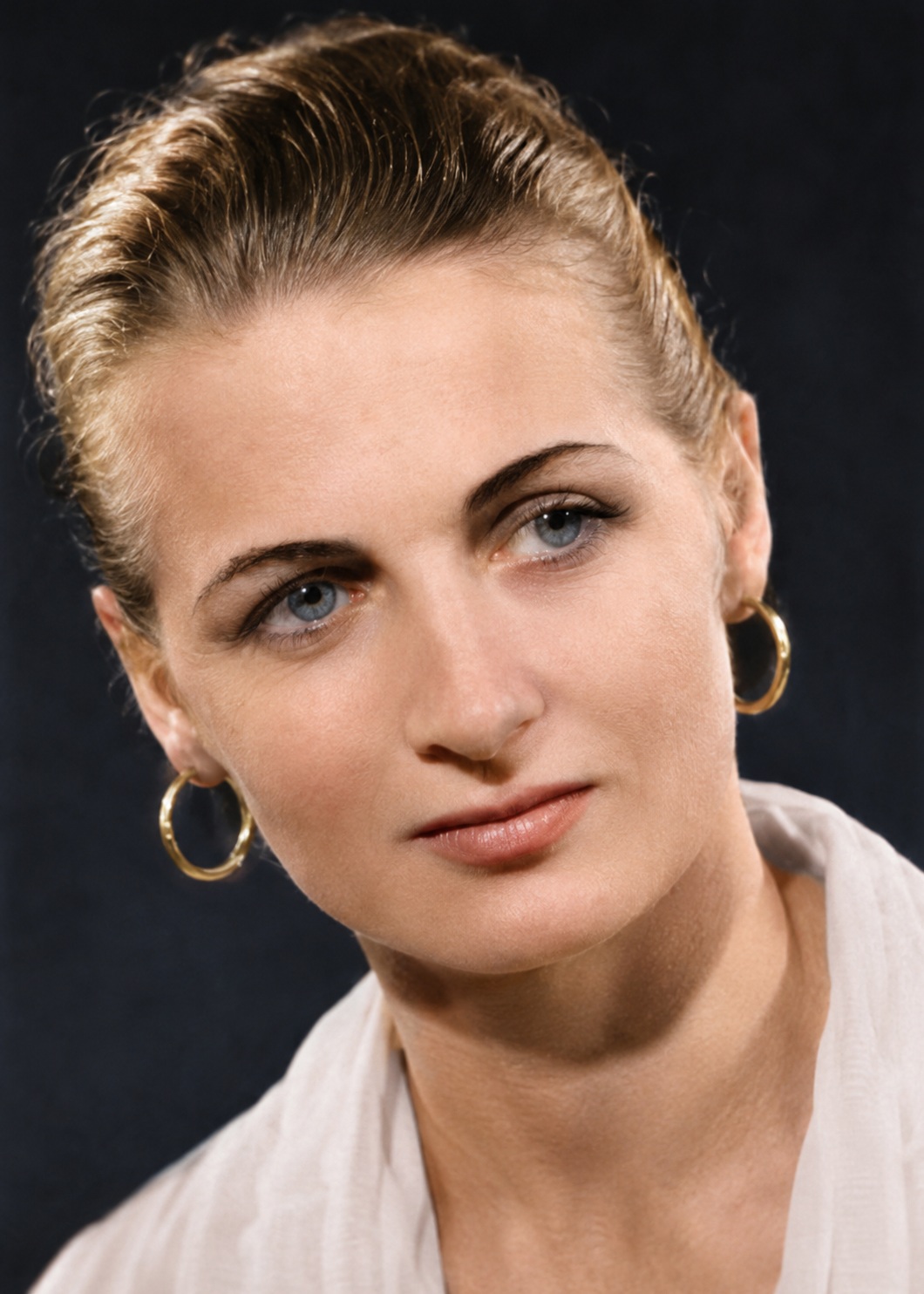
AI-colorized reconstruction of a historical portrait.
Natalia Stanislavovna Yananis, born on September 12, 1936, is a distinguished Russian ballerina, professor, and specialist in historical and classical dance.
An Honored Artist of Russia, she belongs to the generation of performers and teachers who preserved and transmitted the artistic traditions of the Leningrad ballet school throughout the second half of the twentieth century.
Following a successful performing career at the Leningrad Maly Opera and Ballet Theatre, Yananis devoted her professional life to the education of dancers at the Vaganova Ballet Academy.
Her particular contribution lies in the preservation of historical dance, its methodology, stylistic principles, and relationship to the development of classical ballet.
Natalia Stanislavovna Yananis was my teacher of historical dance during my graduation year at the Leningrad Choreographic School named after Agrippina Vaganova.
Biography
Natalia Stanislavovna Yananis was born in Leningrad on September 12, 1936.
Her childhood was marked by the Second World War and the Siege of Leningrad. As a young child, she survived the first winter of the blockade and a serious illness.
Ballet occupied an important place in her family history. Her mother, Marina Borisovna Strakhova, was a graduate of the Leningrad Choreographic School and became an influential teacher of historical dance.
Strakhova had studied the methodology of historical dance associated with Nikolai Pavlovich Ivanovsky, one of the foundational figures in the systematic teaching of this discipline.
Natalia Yananis entered the Leningrad Choreographic School, where she studied classical dance under Natalia Viktorovna Baltacheeva.
In 1956, she graduated from the school and joined the ballet company of the Leningrad Maly Opera and Ballet Theatre.
Artistic Career
Between 1956 and 1978, Natalia Yananis performed at the Leningrad Maly Opera and Ballet Theatre, now known as the Mikhailovsky Theatre.
She developed a substantial repertoire of leading classical and contemporary roles, demonstrating academic technique, expressive plasticity, musicality, and dramatic sensitivity.
Her classical repertoire included Odette-Odile in Swan Lake, Giselle in Giselle, Nikiya in La Bayadère, Medora in Le Corsaire, and leading parts in Paquita.
Among her other important roles were the title role in The Ice Maiden, Franziska in The Blue Danube, and the Tsar Maiden in The Little Humpbacked Horse.
Her theatrical experience encompassed both the traditional classical repertoire and works created by choreographers of the Soviet period.
During her years at the Maly Theatre, she frequently performed alongside Adol Sagmanovich Khamzin, one of the theatre’s leading male dancers and her husband.
Their artistic partnership united two accomplished performers who subsequently made significant contributions to professional ballet education.
Pedagogical Career
Natalia Yananis began her teaching career in 1976 at the Leningrad State Conservatory.
In 1977, she joined the teaching staff of the Leningrad Choreographic School, later the Vaganova Ballet Academy.
She continued her higher education and graduated with honors from the Leningrad State Conservatory in 1984, specializing in choreography and ballet direction.
Her teaching responsibilities included classical dance and historical dance, with particular emphasis on the methodology of historical and ballroom dance of the sixteenth through nineteenth centuries.
She later became professor and head of the Academy’s department responsible for character, historical, contemporary dance, and acting.
Over several decades, Yananis played an important role in preserving historical dance as an integral discipline within professional ballet education.
Her pedagogical activity also extended internationally. She conducted classical dance courses in Hungary, England, and the United States.
She participated in the staging and transmission of classical ballet productions, including La Bayadère, The Nutcracker, Paquita, and Le Corsaire, for theatres in Russia and abroad.
Historical Dance and Its Pedagogical Tradition
Historical dance occupies a distinctive place in the system of professional ballet education. It introduces students to the dance culture, movement vocabulary, social conventions, and artistic styles of earlier centuries.
The discipline encompasses the study of court and ballroom dances, their characteristic steps, patterns, spatial organization, and rules of social interaction.
Historical dance also contributes to the development of stage deportment, coordination, musical phrasing, stylistic precision, and understanding of the relationship between movement and historical context.
Its significance extends beyond the reconstruction of individual dances. It provides dancers with practical knowledge necessary for interpreting historical characters and participating in classical ballet productions.
Natalia Yananis became one of the principal representatives of this pedagogical tradition at the Vaganova Ballet Academy.
Her teaching maintained a direct connection with the methodology developed by Nikolai Ivanovsky and transmitted through her mother, Marina Strakhova.
My Teacher
Natalia Stanislavovna Yananis was my teacher of historical dance during my graduation year at the Leningrad Choreographic School named after Agrippina Vaganova.
Her instruction formed part of the comprehensive professional curriculum, complementing the study of classical, character, and duet-classical dance.
The discipline introduced the stylistic and historical dimensions of dance, emphasizing the relationship between technique, musical structure, theatrical characterization, and historical authenticity.
Place in My Pedagogical Lineage
Natalia Stanislavovna Yananis occupies a particularly important place in my pedagogical lineage because her professional formation brings together two distinct traditions of ballet education: classical dance and historical dance.
These traditions are presented separately below to preserve the distinction between the disciplines and the specific pedagogical relationships through which they were transmitted.
Classical Dance — Pedagogical Genealogy
The classical dance lineage of Natalia Yananis can be traced through her teacher Naima Baltacheeva to Agrippina Yakovlevna Vaganova.
Classical dance tradition: Agrippina Vaganova → Naima Baltacheeva → Natalia Yananis.
Agrippina Yakovlevna Vaganova established one of the most influential systems of classical ballet training. Her pedagogical principles were transmitted through successive generations of teachers at the Leningrad Choreographic School.
Naima Baltacheeva, a representative of this tradition, taught classical dance to Natalia Yananis during her professional education at the school.
This lineage identifies the classical foundations of Yananis’s professional formation. It is distinct from the historical dance tradition that she later transmitted to Aleksei Fomkin.
Historical Dance — Pedagogical Genealogy
The historical dance lineage of Natalia Yananis extends through Marina Borisovna Strakhova and the pedagogical traditions associated with Maria Fyodorovna Romanova, Agrippina Yakovlevna Vaganova, Andrei Vasilyevich Lopukhov, and Nikolai Pavlovich Ivanovsky.
Historical dance tradition: Maria Romanova → Agrippina Vaganova, Andrei Lopukhov and Nikolai Ivanovsky → Marina Strakhova → Natalia Yananis → Aleksei Fomkin.
The Historical Foundations of the Tradition
The extended historical dance genealogy places Maria Fyodorovna Romanova at the beginning of the represented pedagogical tradition.
The following generation is represented by Agrippina Yakovlevna Vaganova, Andrei Vasilyevich Lopukhov, and Nikolai Pavlovich Ivanovsky.
These three connections converge in the professional formation of Marina Borisovna Strakhova, who became an influential teacher of historical dance at the Leningrad Choreographic School.
Marina Strakhova and Natalia Yananis
Marina Borisovna Strakhova preserved and transmitted the methodology of historical dance through her pedagogical work at the Leningrad Choreographic School.
Her daughter, Natalia Stanislavovna Yananis, continued and developed this tradition, eventually becoming one of its principal representatives at the Vaganova Ballet Academy.
The relationship between Strakhova and Yananis therefore represents both a personal and a professional continuity in the teaching of historical dance.
Transmission to Aleksei Fomkin
Natalia Stanislavovna Yananis taught me historical dance during my graduation year at the Leningrad Choreographic School named after Agrippina Vaganova.
Through her instruction, the historical dance tradition associated with Marina Strakhova and her pedagogical predecessors became part of my own professional ballet education.
Historical and Methodological Note. The two diagrams represent distinct disciplinary lineages. The classical dance genealogy traces Natalia Yananis’s professional training through Naima Baltacheeva and Agrippina Vaganova. The historical dance genealogy represents the pedagogical tradition transmitted through Marina Strakhova to Natalia Yananis and subsequently to Aleksei Fomkin.
Agrippina Vaganova appears in both diagrams because the represented traditions intersect in the broader history of the Leningrad ballet school. Her presence in both lineages does not imply that the two disciplines are identical. The extended historical relationships are presented according to the pedagogical genealogy established for this research project.
Historical Photo Gallery
Historical photographs of Natalia Yananis and Adol Khamzin, presented in modern AI-colorized reconstructions.
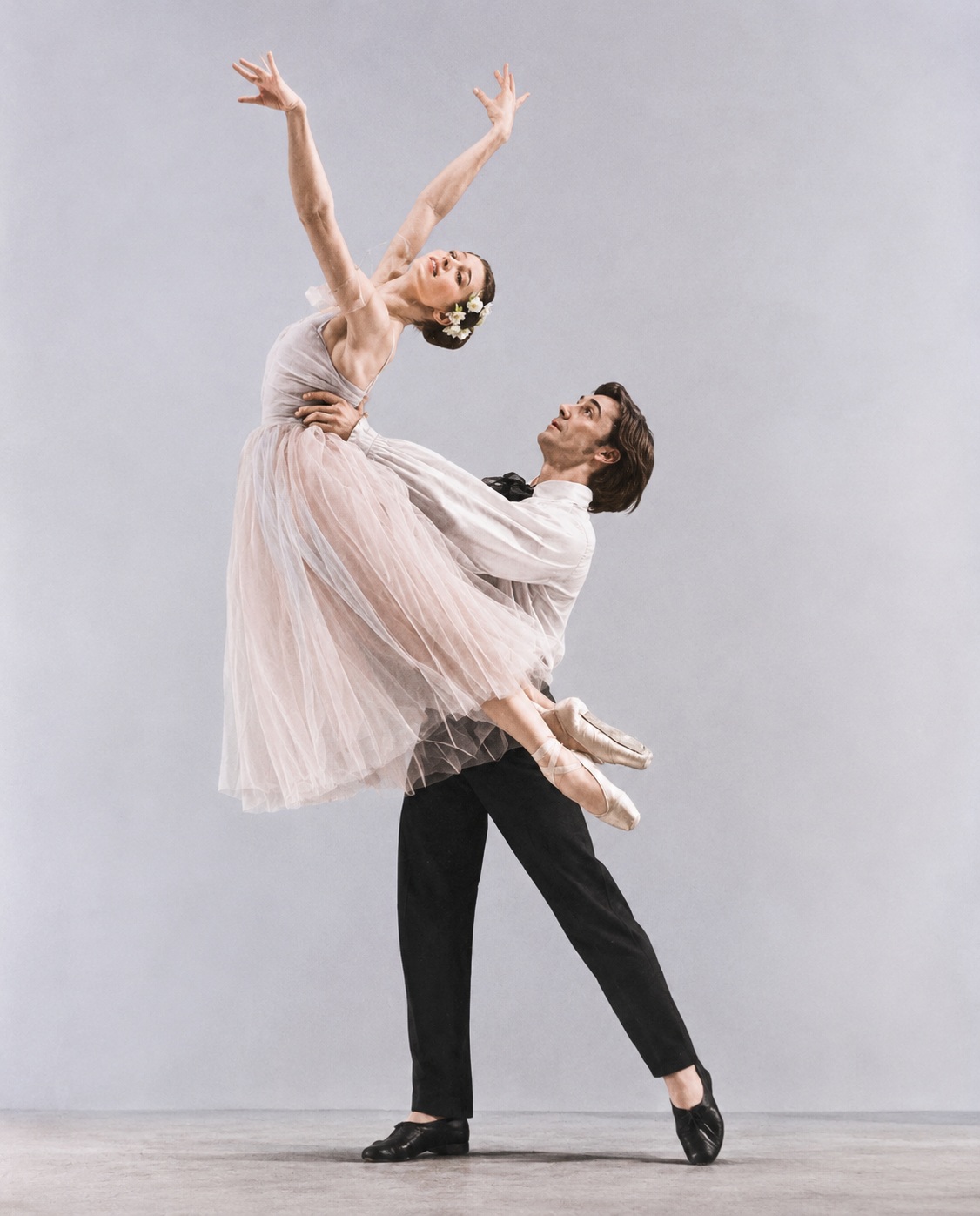
AI-colorized reconstruction of an archival photograph.
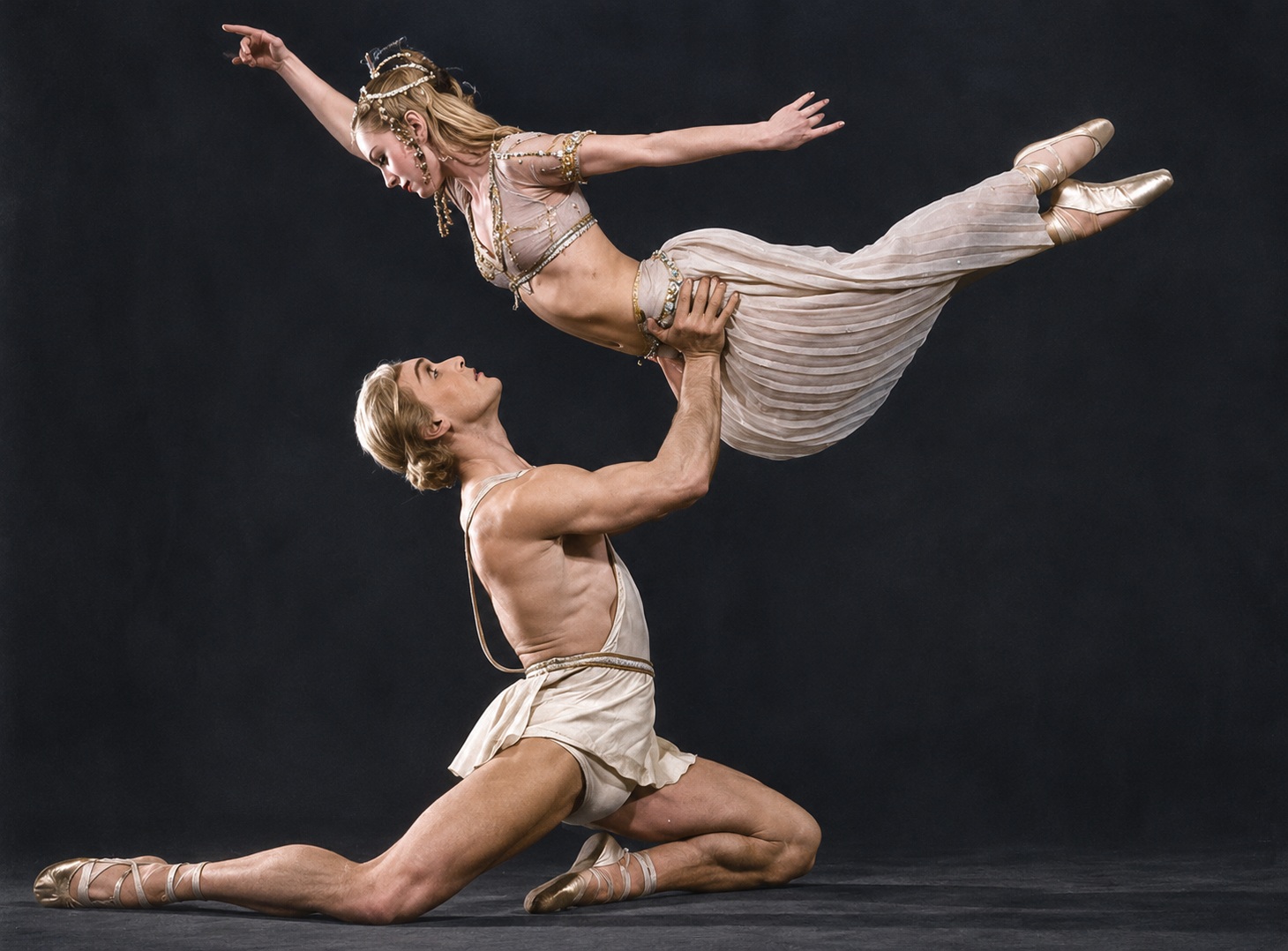
AI-colorized reconstruction of an archival photograph.
Historical Sources
Vaganova Ballet Academy. Official biography of Natalia Stanislavovna Yananis. Read the biography
Vaganova Ballet Academy. “Congratulations on the 90th Anniversary of Natalia Yananis,” September 12, 2026. Read the article
O. I. Rozanova. “The Golden Chain of Continuity: On the Anniversary of N. S. Yananis.” Bulletin of the Vaganova Ballet Academy, No. 4 (45), 2016. Read the publication
Olga Ugarova. “Natalia Yananis.” Ballet Magazine, July 30, 2022. Read the interview
Vaganova Ballet Academy. Presentation of the book-album Natalia Yananis: Dance Forever…, January 2024. Read the article