Vadim Sergeevich Desnitsky
Kirov (Mariinsky) Ballet
Vaganova Ballet Academy
My Graduation-Year Pas de Deux Teacher
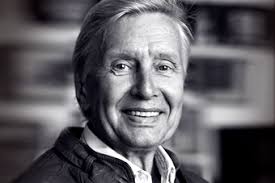
Vadim Sergeevich Desnitsky (1941–2023) was a Russian ballet dancer, professor, and one of the distinguished teachers of classical partnering at the Vaganova Ballet Academy in Saint Petersburg.
His professional life connected two central institutions of the Saint Petersburg ballet tradition: the Kirov (Mariinsky) Theatre and the Leningrad Choreographic School named after Agrippina Vaganova.
Following a long performing career at the Kirov Theatre, he devoted more than fifty years to the education of professional dancers, specializing in duet-classical dance, or classical pas de deux.
Desnitsky was my teacher of pas de deux during my graduation year at the Leningrad Choreographic School.
Biography
Vadim Sergeevich Desnitsky was born on March 15, 1941, in Leningrad. He received his professional education at the Leningrad Choreographic School named after Agrippina Vaganova.
He graduated in 1960 from the class of Alexander Kumysnikov. In an interview published in the Vaganova Ballet Academy’s academic journal, Desnitsky recalled his student years, including his participation in school performances and productions of The Nutcracker.
During his graduation year, the choreographer Yuri Grigorovich noticed the young dancer and recommended him for the Kirov Theatre. Desnitsky subsequently joined the company in 1960.
He remained a member of the Kirov Ballet for twenty-three years, concluding his performing career there in 1983. His theatrical experience subsequently became an important foundation for his pedagogical work.
Artistic Career
During his years at the Kirov Opera and Ballet Theatre, Desnitsky performed in a broad range of classical and twentieth-century ballets.
His repertoire included Swan Lake, Giselle, La Bayadère, Raymonda, The Sleeping Beauty, Le Corsaire, Don Quixote, Romeo and Juliet, and The Nutcracker.
He also participated in productions of The Legend of Love, Leningrad Symphony, and Lefty.
Contemporary accounts emphasized his elegance, refined stage presence, and distinctive manner of classical male dancing. His artistic experience extended beyond technical execution to the interpretation of dramatic roles and theatrical character.
In his later reflections, Desnitsky emphasized the importance of acting in ballet. He recalled a theatrical tradition in which preparation for a role included not only technical rehearsals but also dedicated work on dramatic interpretation.
Pedagogical Career
Desnitsky began teaching at the Leningrad Choreographic School in 1970, while he was still performing at the Kirov Theatre.
His principal specialization was duet-classical dance, the discipline concerned with the technique and artistry of classical partnering.
Classical pas de deux requires a complex integration of balance, coordination, mutual responsiveness, musical phrasing, spatial awareness, and technical precision. Its professional study involves the progressive development of supported movements, promenades, lifts, and choreographic interaction between partners.
For many years, Desnitsky taught successive generations of students at the Vaganova Ballet Academy. He also worked as a répétiteur and participated in the preparation of student ballet productions.
His pedagogical career included work alongside Konstantin Mikhailovich Sergeyev, whose influence on the artistic and theatrical education of dancers was especially significant.
Among the prominent dancers who studied with Desnitsky were Altynai Asylmuratova, Farukh Ruzimatov, Ulyana Lopatkina, and Diana Vishneva.
He continued his association with the Academy until the final years of his life and was remembered as a professor whose work embodied the professional traditions of the Saint Petersburg ballet school.
My Teacher
Vadim Sergeevich Desnitsky was my teacher of duet-classical dance during my graduation year at the Leningrad Choreographic School named after Agrippina Vaganova.
His instruction formed part of the concluding stage of my professional ballet education, when the study of classical partnering was directly connected with preparation for the requirements of the professional stage.
Desnitsky represented the living connection between the performing traditions of the Kirov Theatre and the systematic pedagogical training of the Vaganova School.
My Pedagogical Lineage
Vadim Sergeevich Desnitsky occupies a distinct place in my pedagogical lineage as one of the teachers who contributed directly to my professional ballet education.
His specialization in duet-classical dance represented an essential component of the comprehensive training system developed within the Saint Petersburg ballet tradition.
His education at the Leningrad Choreographic School, his extensive performing experience at the Kirov Theatre, and his long career as a teacher established a continuity between theatrical practice and pedagogical transmission.
Within my own education, his teaching contributed specifically to the discipline of classical partnering and to understanding the relationship between individual technique, cooperation between dancers, and the artistic structure of the pas de deux.
Two complementary pedagogical lines contributed to Vadim Desnitsky’s professional education: classical dance under Alexander Kumysnikov and duet-classical dance under Nikolai Nikolaevich Serebrennikov. Desnitsky subsequently transmitted the tradition of classical partnering to Aleksei Fomkin during his graduation year.
Alexander Kumysnikov: Classical Dance
Alexander Kumysnikov was Vadim Desnitsky’s teacher of classical dance at the Leningrad Choreographic School named after Agrippina Vaganova. Desnitsky graduated from his class in 1960.
This pedagogical relationship represents the foundation of Desnitsky’s professional classical training and his preparation for a performing career at the Kirov Opera and Ballet Theatre.
Nikolai Serebrennikov: Duet-Classical Dance
Nikolai Nikolaevich Serebrennikov was Desnitsky’s teacher of duet-classical dance. This connection is particularly significant because classical partnering subsequently became Desnitsky’s principal field of pedagogical specialization.
Serebrennikov’s contribution represents a distinct pedagogical line within Desnitsky’s professional formation, complementing his classical dance training under Alexander Kumysnikov.
Continuity of Pas de Deux Pedagogy
The relationship between Nikolai Serebrennikov and Vadim Desnitsky establishes a direct pedagogical continuity in the discipline of duet-classical dance.
Desnitsky’s subsequent career as a professor of pas de deux at the Vaganova Ballet Academy extended this tradition to successive generations of professional dancers.
During my graduation year at the Leningrad Choreographic School, Desnitsky was my teacher of duet-classical dance. Through his instruction, I became directly connected with this pedagogical tradition.
Place in My Professional Education
Vadim Desnitsky represents the pedagogical lineage of duet-classical dance within my professional ballet education.
His instruction during my graduation year complemented the work of my classical dance teachers and contributed to the final stage of preparation for professional theatrical performance.
Historical and Methodological Note. The diagram distinguishes two types of instruction: classical dance under Alexander Kumysnikov and duet-classical dance under Nikolai Nikolaevich Serebrennikov. Both are represented as direct teachers of Vadim Desnitsky. The subsequent connection to Aleksei Fomkin concerns duet-classical dance instruction during his graduation year. Desnitsky’s professional collaboration with Konstantin Mikhailovich Sergeyev is not presented as a teacher–student relationship.
Historical Photo Gallery
Historical photographs documenting Vadim Sergeevich Desnitsky and the ballet tradition of his time.

Historical Sources
Vaganova Ballet Academy. Memorial notice dedicated to Vadim Sergeevich Desnitsky, September 26, 2023.
L. I. Abyzova. “Vadim Desnitsky, Cavalier of the Duet Dance.” Bulletin of the Vaganova Ballet Academy, No. 2 (43), 2016. Read the publication
Saint Petersburg Philharmonia. Historical biographical archive. Vadim Desnitsky