Lidia Evgenievna Goncharova
Kirov Opera and Ballet Theatre
Leningrad Choreographic School
My Graduation-Year Character Dance Teacher
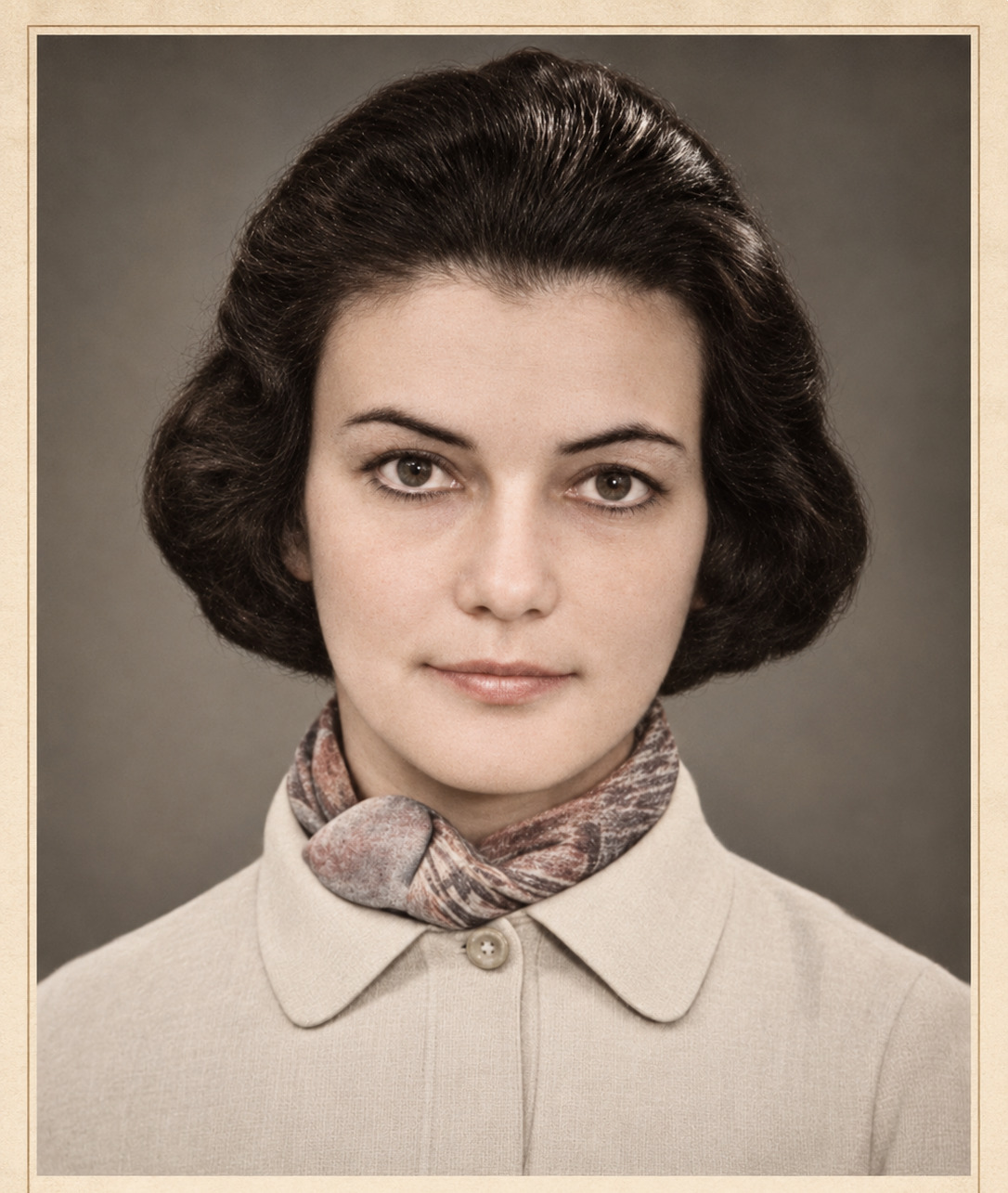
Lidia Evgenievna Goncharova (1922–2014) was a Soviet ballet dancer and teacher whose professional career connected the performing traditions of the Kirov Opera and Ballet Theatre with the education of future generations of dancers at the Leningrad Choreographic School.
She was particularly associated with character dance, a discipline occupying an important position within the Russian system of professional ballet education. Her theatrical experience provided a practical foundation for her later pedagogical work.
Goncharova was my character dance teacher during my graduation year at the Leningrad Choreographic School named after Agrippina Vaganova.
Biography
Lidia Evgenievna Goncharova was born on August 22, 1922, in Petrograd. She received her professional ballet education at the Leningrad Choreographic School, where her teachers included Agrippina Yakovlevna Vaganova and Andrei Vasilyevich Lopukhov.
After graduating in 1940, she joined the ballet company of the Kirov Opera and Ballet Theatre in Leningrad. She remained associated with the theatre as a performer until 1964.
During her stage career, Goncharova became known for her performances in character roles and dances. This repertoire required a distinctive combination of classical technique, theatrical expressiveness, musical responsiveness, and command of national dance styles adapted for the ballet stage.
In 1973, she received the honorary title of Honored Art Worker of the Tajik SSR. She died on September 25, 2014, in Saint Petersburg.
Artistic Career
Goncharova’s theatrical career developed within the Kirov Ballet, one of the principal institutions preserving and developing the traditions of Russian classical dance.
Her repertoire included Odarka in Taras Bulba, the Polovtsian Woman in Polovtsian Dances from Borodin’s Prince Igor, and the Street Dancer in The Bronze Horseman.
She also performed character dances in major classical ballets, including the Spanish Dance in Swan Lake, Mercedes and the Gypsy Dance in Don Quixote, and the Panaderos in Raymonda.
These roles demonstrate the breadth of her stage experience in character dance and its integration into the classical ballet repertoire.
Pedagogical Career
In 1964, Goncharova began teaching character dance at the Leningrad Choreographic School named after Agrippina Vaganova. Her transition from theatrical performance to teaching reflected a long-established tradition in which experienced ballet artists transmitted professional knowledge to younger generations.
Character dance in professional ballet education is not simply the study of national dances. It is a theatrical discipline through which students acquire stylistic differentiation, rhythmic precision, expressive coordination, and the ability to embody diverse choreographic characters within the classical repertoire.
Between 1976 and 1978, Goncharova worked in Egypt as a teacher and répétiteur at the Cairo Ballet Institute. This period extended her pedagogical activity beyond the Soviet Union.
Through her work at the Leningrad Choreographic School, she contributed to the education of successive generations of professional ballet dancers.
My Teacher
Lidia Evgenievna Goncharova was my character dance teacher during my graduation year at the Leningrad Choreographic School named after Agrippina Vaganova.
Her instruction formed part of the final stage of my professional ballet education, when character dance was studied in close connection with the technical and artistic requirements of the theatrical repertoire.
Her experience as a performer of character roles at the Kirov Theatre represented a direct connection between professional stage practice and the pedagogical traditions of the school.
My Pedagogical Lineage
Lidia Evgenievna Goncharova occupies an important place in my pedagogical lineage as the teacher responsible for my character dance instruction during the graduation year of my professional ballet education.
Her own professional training at the Leningrad Choreographic School was associated with two significant teachers: Agrippina Yakovlevna Vaganova and Andrei Vasilyevich Lopukhov.
These two pedagogical connections reflect different dimensions of the historical Leningrad ballet school. They converged in Goncharova’s professional formation and subsequently informed her artistic and pedagogical activity.
The diagram represents two teacher–student connections in Goncharova’s professional education and their continuation through her direct teaching of character dance to Aleksei Fomkin during his graduation year.
The Vaganova Lineage
Agrippina Yakovlevna Vaganova was one of the most influential figures in the development of twentieth-century classical ballet pedagogy. Her system established a comprehensive approach to the organization and progression of classical dance training.
Goncharova’s education under Vaganova connected her professional formation with this central tradition of the Leningrad Choreographic School.
The Lopukhov Lineage
Andrei Vasilyevich Lopukhov represents another direct pedagogical connection in Goncharova’s education. His place in the diagram is based on the teacher–student relationship identified in her biographical record.
The two teachers are presented as parallel branches because the available information does not establish a precise chronological sequence for their respective periods of instruction.
Character Dance in My Professional Education
Goncharova’s contribution to my professional ballet education concerned character dance, a discipline that integrates elements of national dance traditions with the technical and theatrical requirements of classical ballet.
Her instruction during my graduation year connected the study of character dance with professional stage practice, stylistic interpretation, and expressive performance.
Her place in my pedagogical genealogy therefore represents a specific and important dimension of my education, distinct from classical dance technique and acting instruction.
Historical and Methodological Note. The diagram identifies Agrippina Vaganova and Andrei Lopukhov as teachers of Lidia Goncharova, as stated in the present biography. It does not assign undocumented periods of instruction or extend their pedagogical genealogies beyond the relationships recorded here. The connection between Goncharova and Aleksei Fomkin refers specifically to character dance instruction during his graduation year.
Historical Photo Gallery
Archival photograph illustrating the performing career of Lidia Evgenievna Goncharova.

Identification of Lidia Goncharova in the archival photograph is based on the personal recollections of Aleksei Fomkin.
Historical Sources
Biographical information: Russian Ballet Encyclopedia; Saint Petersburg Philharmonia historical biographical archive; Vaganova Ballet Academy graduate records.